Unattended Death Cleanup
When a death remains undiscovered for days, cleanup addresses decomposition and controls odors.
See unattended death cleanupGet decomposition fluids, affected flooring, furnishings and odor treated with care in Mount Holly. Source removal comes first because air treatment alone cannot correct absorbed contamination.
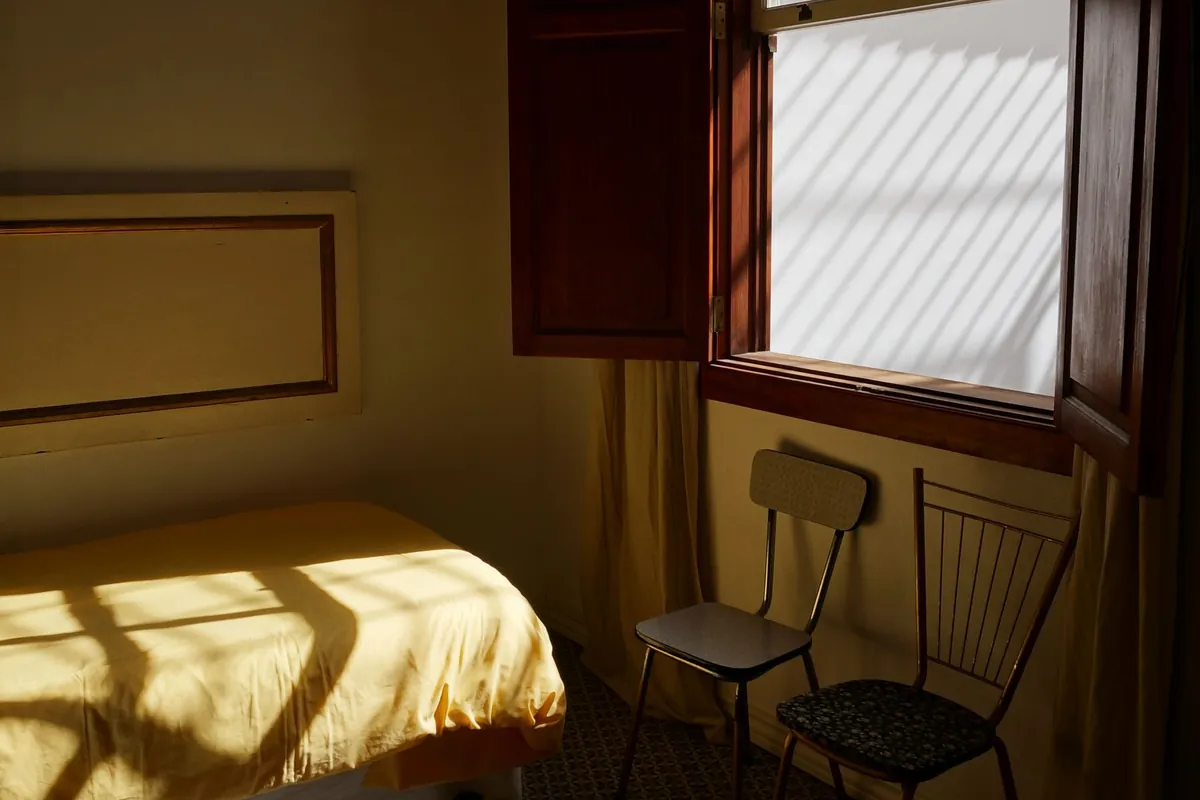
Decomposition cleanup means cleaning and disinfecting an area after a person dies, along with removing affected porous materials, residue and fluids. Treatment for odor that remains comes afterward.
This work may be needed after an unattended death, or whenever the time before discovery allowed fluids to reach flooring, furniture or the structure below. Police, emergency personnel and the medical examiner or coroner complete their duties first. Cleanup can begin only after the property is released to you or the person responsible for it.
The work in decomposition cleanup involves careful treatment beyond what you can see. Fluids may travel into subfloor, under baseboards, through carpet and pad, or along sheet-flooring seams. Assessment follows the route of that movement. When complete treatment is possible, materials stay. Anything contaminated beyond full cleaning is taken out, sealed and managed according to applicable waste rules.
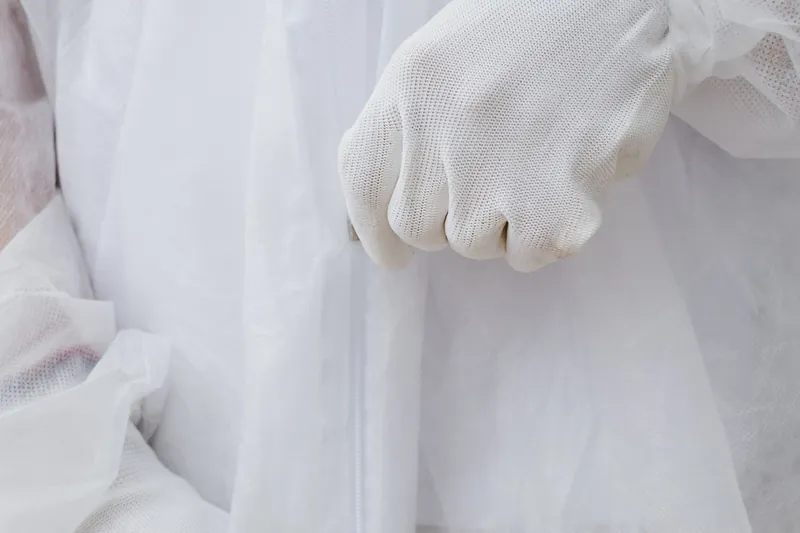
Cleanup crews explain which materials can stay, which need removal and why each step belongs in the scope before work begins.
Calls are answered day and night, and crews arrive in unmarked vehicles to protect your privacy during a sensitive time.
You can move forward by using an itemized scope, waste documents and photos to help restoration services and insurance companies understand what was left behind.
When safe sorting is possible, photos, documents and treasured items from loved ones are set aside for your decisions.
Decomposition cleaning services are needed when fluids or odor remain after a death and ordinary household cleaning cannot reach all affected materials. Every situation is different, but common needs include:
A bed, carpet or solid floor can show contamination or odor while affected material remains below.
Careful inspection is needed when fluid may extend into shared walls, flooring systems or the unit underneath.
Deep absorption in upholstery, cushions or unsealed wood can mean those materials must be taken out.
Every situation begins after the emergency response and official duties are complete. When a person is not found right away, fluids can pass through bedding, flooring or nearby furnishings.
Before the affected room is disturbed, focus on your safety, protection for nearby spaces and preserving records. Taking these steps can also support a more straightforward assessment:
Call (888) 440-9227The available cost source does not list a range specifically for decomposition cleanup. Its closest published guide is unattended death cleanup, which commonly involves odor and decomposition fluids. Early discovery has a range of $1,500 to $5,000 in that guide. Discovery within about 72 hours is listed at $3,000 to $8,000 there. For one to two weeks, the figure is $8,000 to $18,000 in comparison. After three weeks or more, it becomes $15,000 to $35,000 according to the guide. Your assessed scope determines the actual price.
These ranges come from published national cost guides, not from a site visit. An on-site assessment determines your property's price, which is explained to you before the cleanup starts.
Ask about cost: (888) 440-9227Decomposition cleanup may qualify for coverage under renters, commercial property or homeowners insurance if the death is a covered loss. The insurance company decides by applying the policy terms, deductible and circumstances.
Homeowners or renters insurance is usually the first place to ask about cleanup costs. After a death the estate often pays, and in a rental the owner usually arranges the cleanup.
Property owners commonly coordinate cleanup for rentals, but the circumstances and applicable policies determine which party or insurer ultimately pays.
If damaged material can safely remain, check the adjuster's requirements before removing it. The claim decision may be supported by photographs, detailed work scope and waste documentation.
After learning of the loss, call the number for insurance claims. Ask the insurer whether separate policy sections cover cleanup, building damage, personal property and later restoration.
The entire process follows a controlled order so hidden impact is found before cleaning and odor treatment begin. Cleanup technicians consider your property, belongings and privacy at every step.
The room is examined along with surrounding areas and any lower space. Airflow, furniture, flooring and the edges of walls help determine how far work must extend.
Barriers divide the cleanup zone from unaffected spaces. Technicians use personal protective equipment and set up airflow controls when the conditions call for them.
Workers collect residue they can see, then carefully uncover absorbent materials to verify how deep and where contamination traveled.
When treatment cannot reach contamination where it sits, affected carpet, padding, upholstery, raw wood, drywall or subfloor is taken out.
Remaining hard surfaces are cleaned before an EPA-registered disinfectant is applied for the full contact time stated on its label.
Treatment of the air and retained surfaces begins once source material is removed. Suitable equipment is chosen for the space and run according to the manufacturer's directions.
Rules for the location guide crews as they seal affected waste in suitable containers and prepare it to be transported and disposed of.
For the property owner, insurer, restoration contractor or you, the final scope may be compiled with project photos and disposal records.
Phone any hour. You speak with a decomposition cleanup specialist who outlines the process and schedules a start time with you.
Avoid cleaning or entering any area where decomposition fluids are present. Unseen contamination can pose a serious health risk and could require parts of the building to be taken out.
The space may belong to someone you care about. Leaving the hands-on cleanup to others may spare you an experience that could remain emotionally difficult.
Bodily fluids and blood can contain disease-causing organisms. The CDC says hepatitis B can survive on surfaces for at least seven days, so dried residue still deserves careful treatment.
Do not treat contaminated materials as household trash. Depending on their contents and the rules that apply, they may need to be packaged and managed as hazardous materials.
Can you clean it yourself? A small domestic spill does not present the same cleanup needs as decomposition. Keep the space shut and request professional assessment when a death leaves fluids, residue or lasting odor. Leave the carpet and affected mattress in place, and do not probe the material with bare hands.
Affected materials may remain if every impacted surface can be reached, cleaned and disinfected. Removal is generally needed when contamination has soaked in deeply.
Decomposition cleanup may last from one day for a small accessible area to several days where fluids reached walls, floors, furnishings or rooms underneath. The full affected boundary must be assessed before timing can be determined accurately.
| Scene | Typical time on site |
|---|---|
| Limited area on accessible materials | Often about one day after assessment |
| One room with porous material removal | Frequently takes one to three working days |
| Several affected areas or impact to building materials | Could take several days before restoration occurs later |
Decomposition odor removal starts with finding and removing the source. Fragrance, paint and surface sprays cannot correct fluid beneath flooring, inside unfinished wood or within upholstered furniture. If odor returns after airing out the room, another affected material or pathway may still need attention.
Cleaning and disinfection take place after contaminated material has been removed. Depending on the space, controlled ventilation, HEPA-filtered air equipment or other odor equipment may follow under its operating instructions. When odor has spread, checks may extend to wall gaps, HVAC returns and adjoining rooms. Cleanup and odor treatment must finish before rebuilding begins.
The full decomposition cleanup guide covers what is cleaned or removed, odor and air quality work, and the rules that apply in your state.
Read the full decomposition cleanup guideLocal housing, population and access details can shape containment, access and cleanup planning.
In Mount Holly, 31.2% of homes are renter occupied, so privacy and simple communication matter when a property contact is involved.
In housing built around 1999, selective removal can expose affected layers without disturbing finishes outside the cleanup boundary.
With 23.2% of seniors living alone, private cleanup communication may need to include a relative who lives somewhere else.
Detached and single-family properties account for 83.2% locally, so exterior access and safe waste movement should be planned early.
Your phone conversation can include questions about service in nearby ZIP codes and communities.
When a death remains undiscovered for days, cleanup addresses decomposition and controls odors.
See unattended death cleanup
Home cleaning following a death includes affected possessions as well as fluid and odor cleanup.
See death cleanup
Careful work in the family home follows when a death is discovered quickly.
See attended death cleanup
Air scrubbers, hydroxyl and ozone treatment support death odor removal at its source.
See death odor removal
A contaminated space is restored to safe use through biological remediation and contaminant removal.
See biohazard remediation
Investigation residue, tissue and fingerprint powder are addressed along with forensic cleaning of blood.
See forensic cleaning
Walls, carpets, furnishings and hard floors receive blood cleanup, with safe disposal afterward.
See blood cleanup
Following a death, estate cleanout includes sorting possessions and removing them safely.
See estate cleanout after a deathCleanup after decomposition takes out bodily fluids, residue and absorbent materials impacted by the death. The remaining accessible surfaces are cleaned and disinfected, then odor is treated after its source is gone. Fluid movement can extend the work to include drywall, subfloor, carpeting, furniture, padding and items close by.
When a death qualifies as a covered loss, homeowners insurance might pay for cleaning and affected materials. Your coverage is not automatic. Call the insurer, describe the event and ask about biohazard remediation, personal property, structural repairs and the deductible. Keep the claim number, photos, itemized scope and disposal records.
A biohazard cleanup team should assess a room when decomposition fluids, residue or persistent odor are present. You should not move an affected mattress, pull up flooring or disturb residue yourself. You could spread residue beyond the room or contact materials that must be packaged and discarded under controlled conditions.
Removal is needed if fluid penetrated beyond the depth that cleaning and disinfection can fully reach. Materials often removed include carpeting, padding, mattresses, upholstered items, raw wood, wallboard, molding and parts of the subfloor. Sealed tile, metal, glass and other accessible non-porous surfaces may be cleaned and kept when their condition allows it.
Belongings are assessed by location, material and condition. Clean personal items can remain protected beyond the work area. When safe sorting is possible, pictures, documents and mementos can be separated so you can decide about them. A porous item may need removal when surface cleaning cannot reach fluid contamination absorbed inside.
The available source does not publish a specific price range for decomposition. Related unattended death guides list $1,500 to $5,000 for early discovery and much higher ranges after longer periods. Actual pricing and scope depend on fluid depth, materials taken out, room impact, odor treatment and waste disposal.
Respectful, discreet decomposition cleanup is available 24 hours a day, and crews arrive in unmarked vehicles.